‘We will be concentrating much more on the climate change and circularity focus themes in 2024’
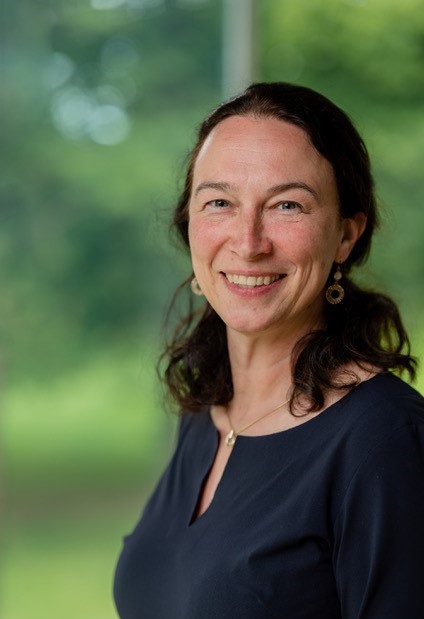 Kim Haasbroek has been a member of the SPF Board for a year and a half as external Board professional in asset management. She also became a Board member at Pensioenfonds Zorg en Welzijn last March. Furthermore, Kim chairs the Stichting Pensioenfonds voor Huisartsen audit committee and is active in two real estate funds. So it’s not surprising that she has an above-average interest in both ensuring optimal pensions in a liveable world and in the sustainability theme. See below for a candid Q&A with a Board member who knows what she stands for.
Is it really logical for you to advocate for optimal pensions in a liveable world?
‘I think so, yes. I started out as a property investor. From a sustainability perspective, I was very quickly confronted with ESG (Environmental, Social and Governance, ed.) policies. In other words, how can real estate contribute to a liveable world? ESG also became increasingly important from a risk management perspective, particularly regarding how to embed this in the investment process. So it was always a major focus for me, and now more than ever.’What is your personal drive to advocate for optimal pensions in a liveable world?
‘I have three children aged nine, eleven and twelve. We watch the Jeugdjournaal (news programme for young people) together every evening. My children see the impact of climate change there every day. And then they ask: ‘Mum, what can we do about this? What can you do?’. My 11-year-old son wants to be an inventor and already comes up with all kinds of ideas to combat climate change. Or my eldest 12-year-old son asks: ‘Why aren’t all cars electric? The other cars stink so much’. It notices that this is a really important theme for them, which in turn makes me think about what more we can do. Not only for their generation but also for all people who will be retiring soon. It strengthens my belief that, as a financial sector, we need to contribute to a liveable world without compromising on returns.’How would you describe SPF’s sustainability policy?
‘The discussions we have in the Asset Management committee address various topics including that, in principle, we don’t want to exclude entire sectors, except those on our exclusion list, such as companies involved in controversial weapons. For instance, we think it’s going a bit far to exclude the entire oil industry. As a committee we do, however, consider where we can make the difference because we need this industry to realise the transition. That’s why we’ve opted for investments that contribute to this in a good way. We’ll not change the world by excluding an entire sector. We prefer to use engagement. This involves entering into a dialogue with companies to make them aware of their responsibility towards ensuring a liveable world. If we don’t see any change at all after three years, we no longer invest in a company. We want to see progress. And we want to make the transition together with companies. That’s a huge challenge but it’s a really great thing to work on every day.’As a Board, you want your policy to align closely with members’ opinions. The most recent member survey (2022) showed that people do want SPF to have a sustainability policy, but that this should not be at the expense of the returns. Is that something that goes together: a sustainability policy and good investment returns?
‘I sincerely believe that as a long-term investor, which we are as a pension fund, we cannot operate without a well-thought-out sustainability policy. We need to be able to evaluate at any time whether our investments are delivering enough returns and the level of risk they carry. In today’s economy, you can’t avoid including sustainability as a central theme. The focus on sustainability clarifies where we should be investing as SPF. It answers the question of which investments will represent more value in the future and which investments will be worth less. You want to avoid these latter investments as this will severely affect your investment returns. Being aware of the risks and opportunities will enable us to make the best investment portfolio choices. What is a good match for our pension fund? What is a good match for our members? What is a good match for SABIC?’‘Here’s a good example. I used to be a real estate investor in Asia and Australia. At a certain point, office investments were no longer profitable in Australia because many buildings were not energy efficient. The effect? Renters didn’t want to rent the offices, buildings stood empty and the value fell sharply. And that applied to investment returns too. The market punished these real estate companies for not joining the transition towards greater sustainability.'
The SPF sustainability policy focuses on two themes: climate change and circularity. Why these two specific themes?
‘ As well as climate change, three other themes were prominent in the 2022-member survey: health & welfare, biodiversity and circularity. We eventually selected circularity to match the SABIC focus themes. This doesn’t mean that we don’t do anything on the other themes, but from the SABIC DNA we can make more of a difference on climate change and circularity. That’s our priority. Apart from that, we need focus because, as a pension fund, you simply can’t do everything. We really want to flesh out both themes within our investment portfolio. For example, we make so-called infrastructure investments based on our climate change theme, such as our investment in the French company Stations-e, which combines green energy, mobility and telecoms. The company installs some 2,000 new charging stations in its own country every year to make it easier for people to drive electric. They can then add extra services to these stations such as parcel collection points or locations for carpooling and car sharing.’